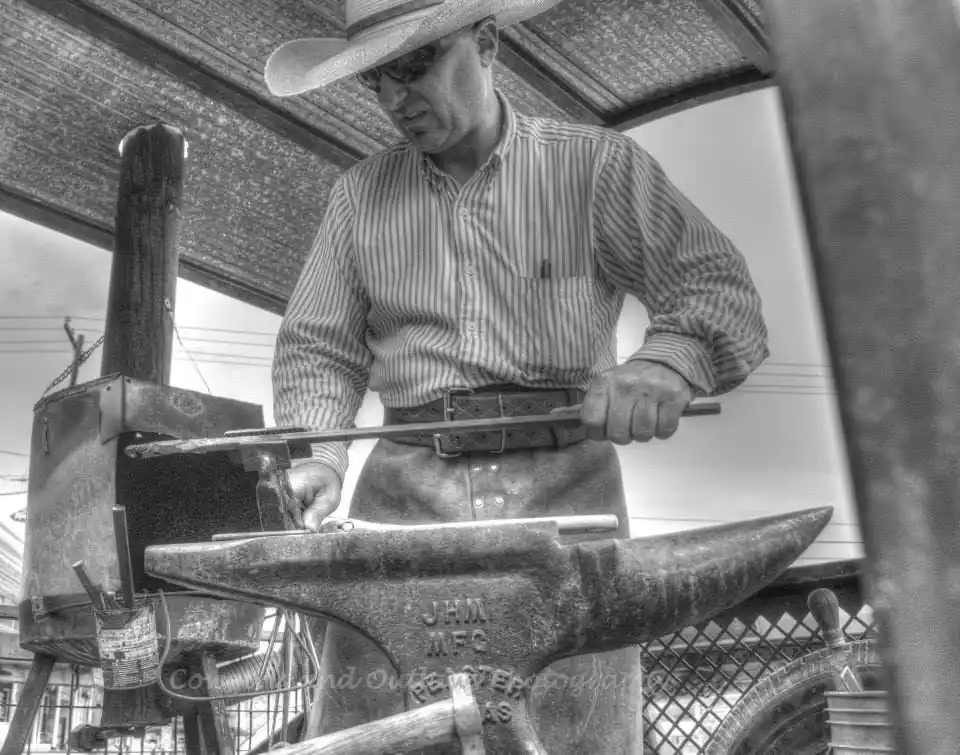
N.J. Pawley comes from a long line of horse trainers. His parents trained horses, he trained horses, and when he got to high school he worked out that if he was going to keep them, he might as well learn to shoe them, because shoeing is one of the most expensive parts. He apprenticed with the teacher at the local college, took the course twice, apprenticed with a couple more men, and became a farrier.
That is where the blacksmithing starts. A farrier has to make his own shoes, and then his own tools, and once you are making your own tools you are a blacksmith whether you have called yourself one or not.
He trained horses and shod them through a marriage, a move to Park City, Utah, and a divorce. Then something happened that he could not have engineered. He was helping manage a hunter jumper barn, and one of the clients there was a buyer for the Sundance Catalog Company. He had made Christmas gifts for the barn's clients that year. She picked hers up and asked whether he could build a hundred of them. "I said, I can build a thousand of those."
That led to Sundance Catalog, then to Sundance Resort as an artist in residence, then to years of demonstration work at the farmers markets around Park City, and to working for Robert Redford. He is dry about the title. "I was just a cowboy. But artist in residence means you learn how to do other things." So he learned silver and jewelry work too. For years the shape of his life was training horses in the summer and blacksmithing through the winter.
When he moved back to Cody he did not want to go back to shoeing. Building that clientele again is its own struggle, and by then the internet had arrived. He has been forging full time since about 2008, and in this shop for seven years.
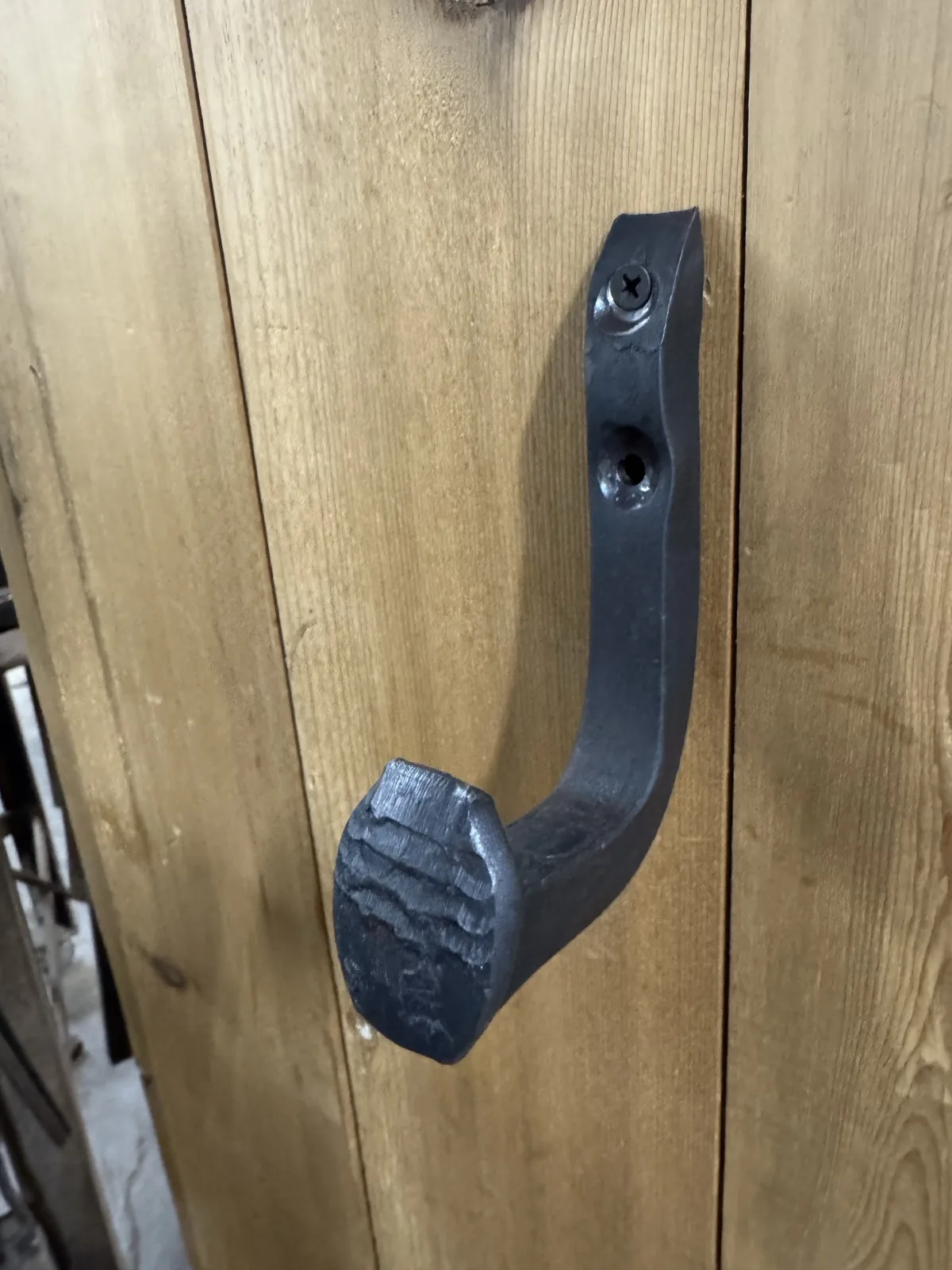
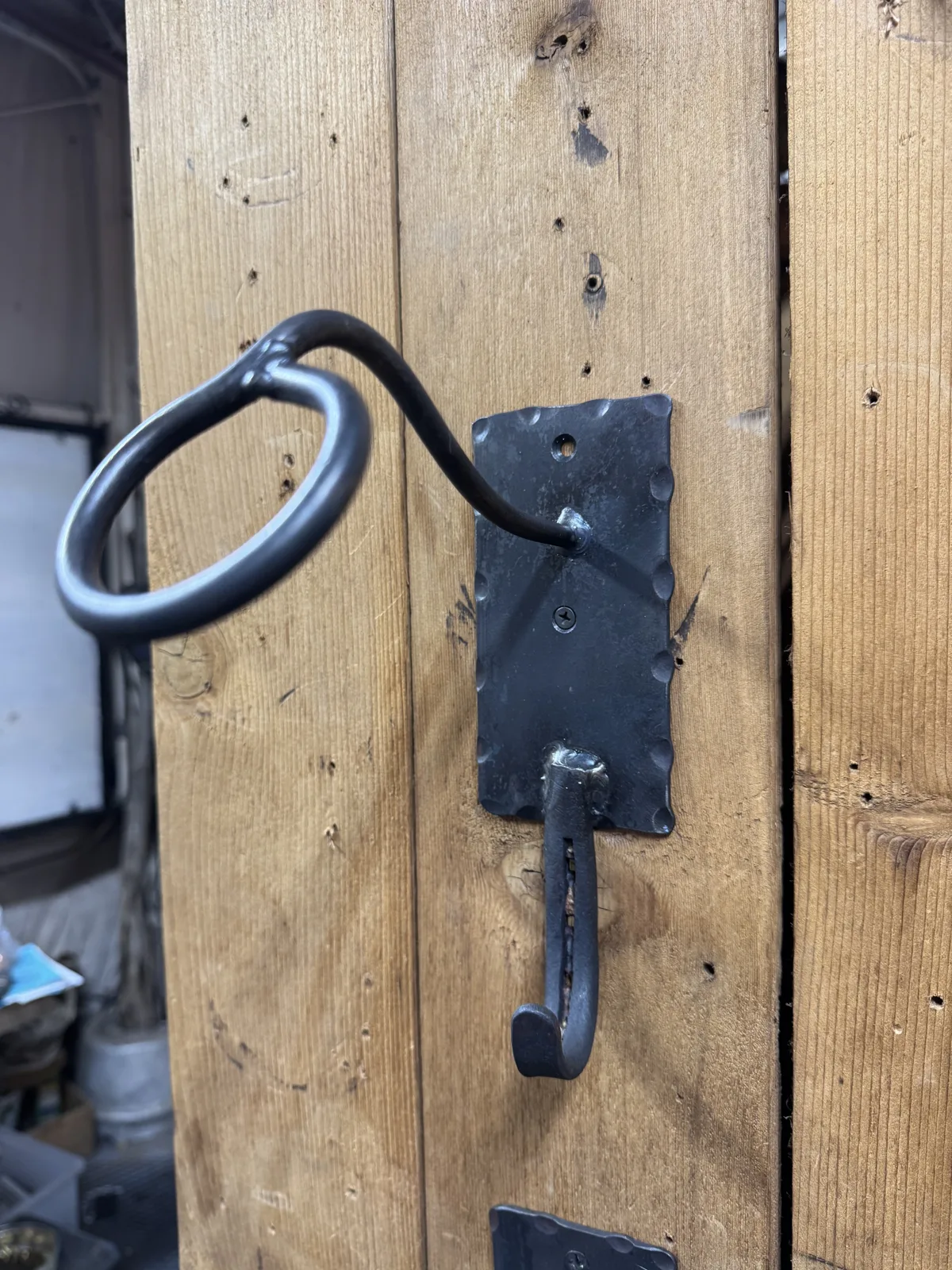
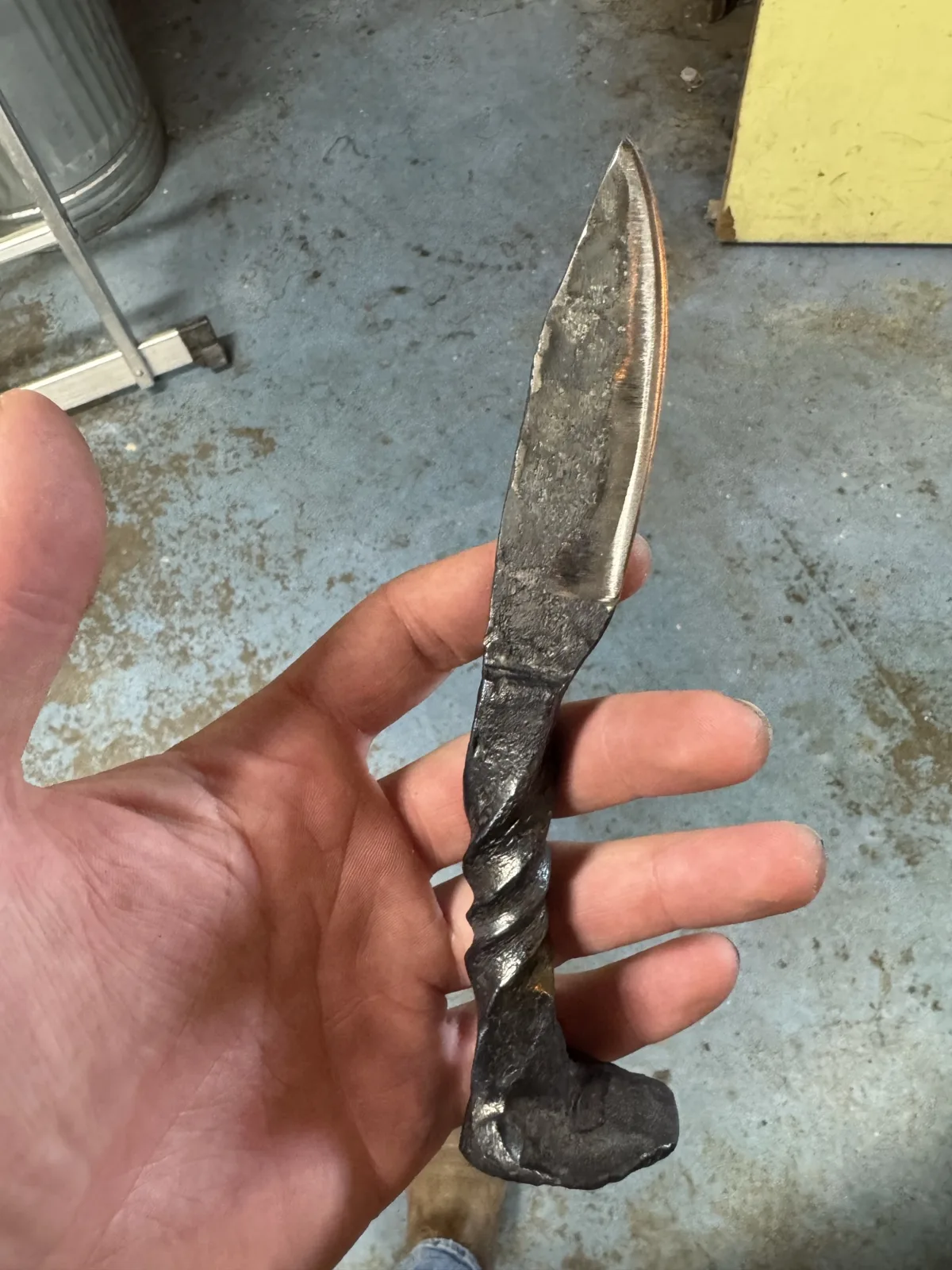
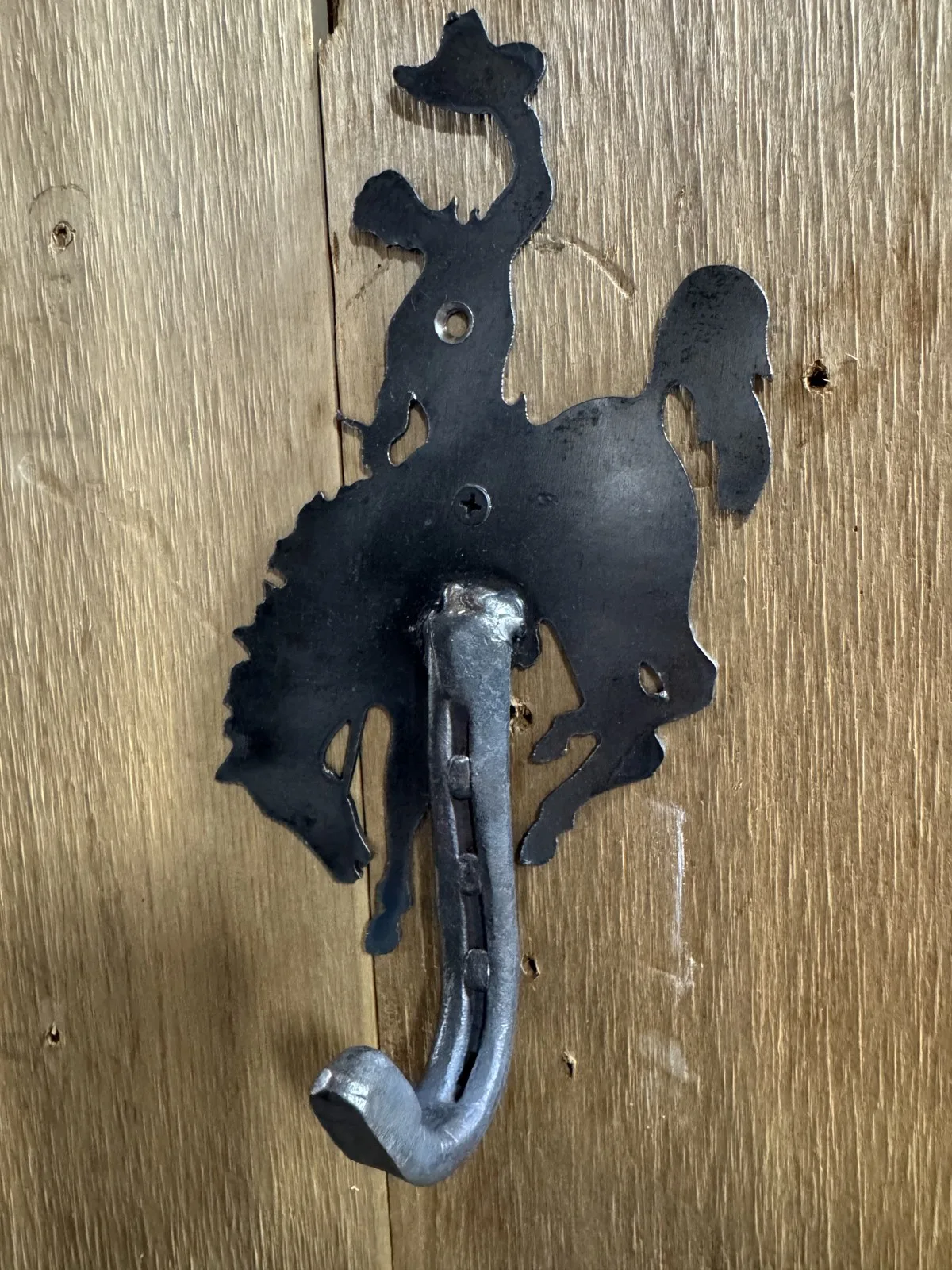
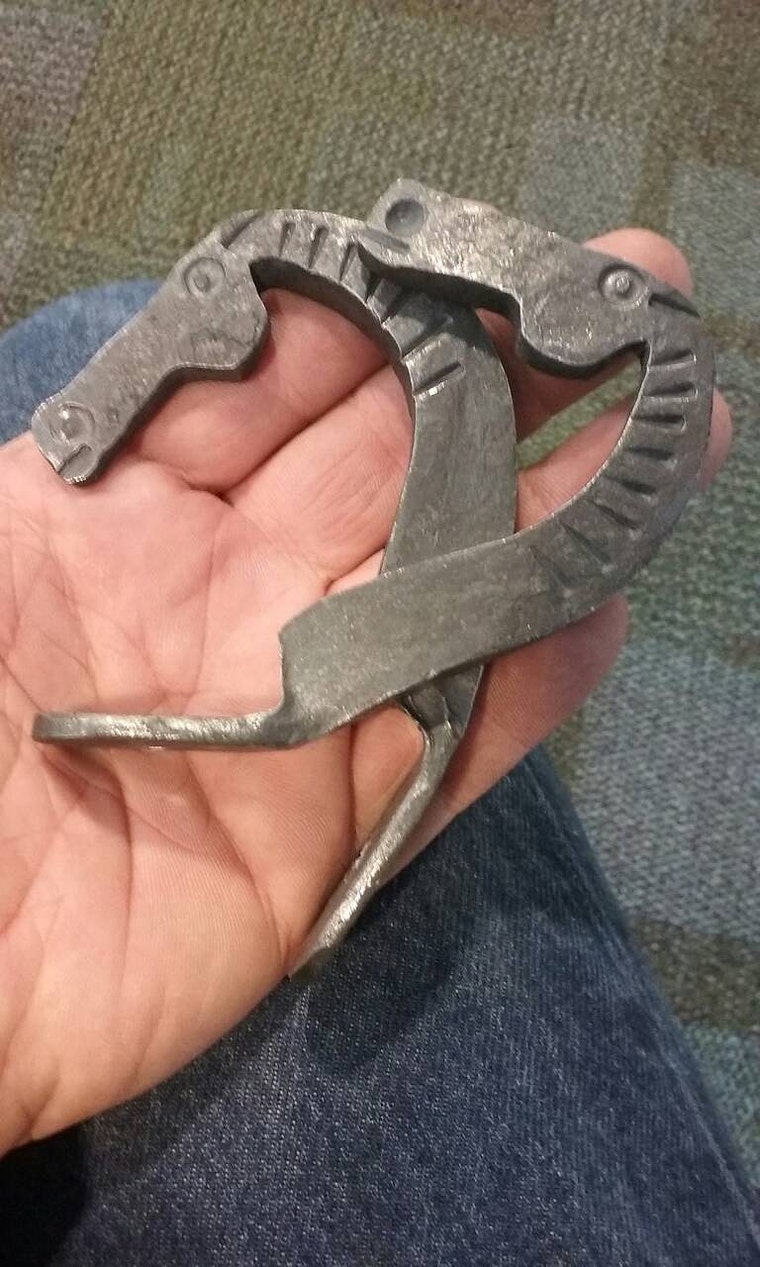
Ninety percent of the business is online. What he actually makes is more domestic than the word blacksmith suggests: hat racks, drawer pulls, toilet paper holders, towel bars, bridle racks, dinner bell triangles, wall hooks, fireplace pokers, custom back cinch buckles, tomahawks and knives. He has built more than three thousand hat racks and has orders for a hundred more. Knives used to be three hundred a year and are now fifty to a hundred, because seven knife makers set up in Cody and he saw no sense in fighting for that market when there are a thousand things nobody else is building. That is the freedom of the trade, in his telling. You can just walk to the other side of the shop and make something else.
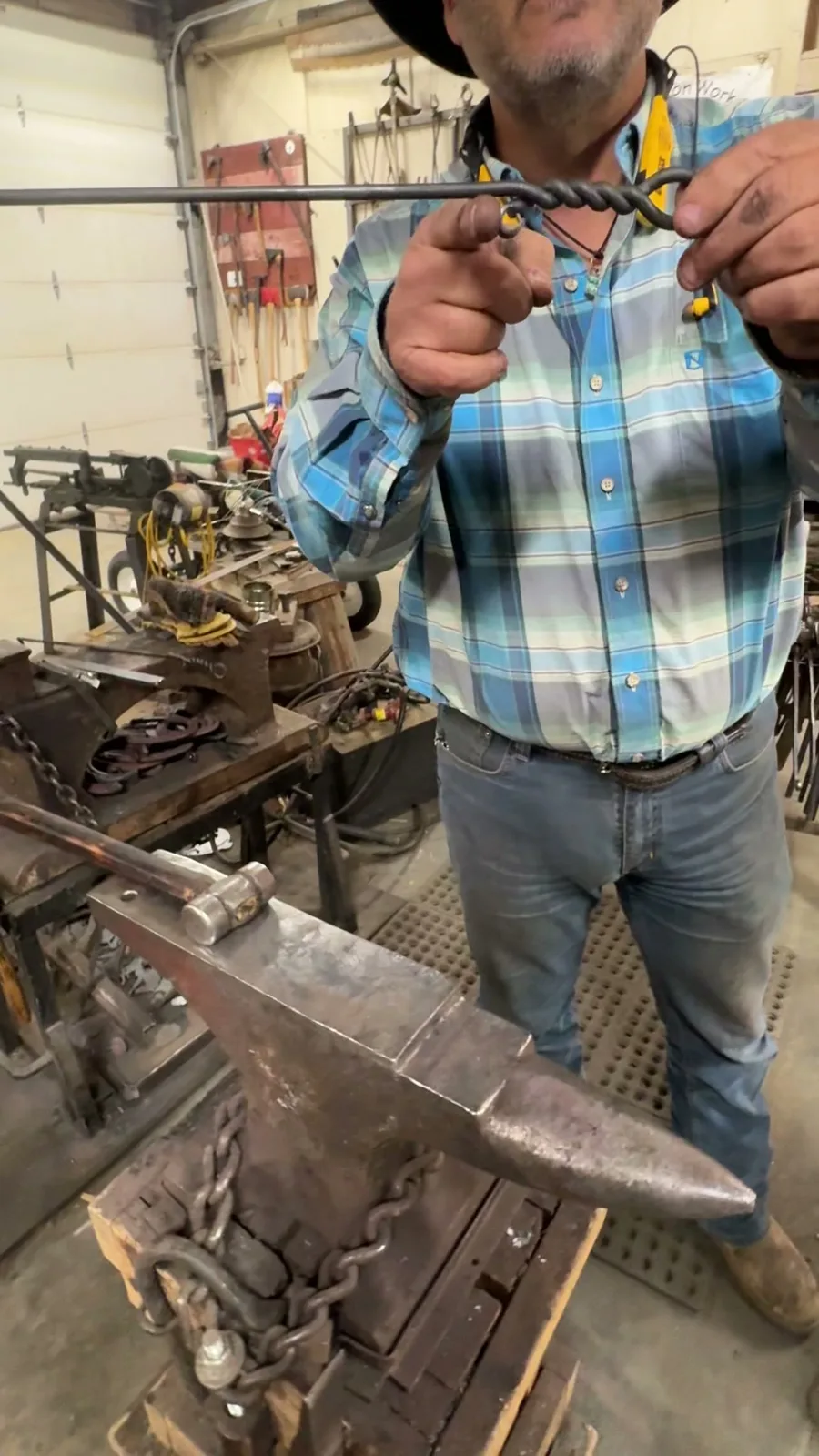
He used to work heavily in recycled horseshoes, and still uses reclaimed material, pole barn spikes nobody wants now that everything is screwed together, lawnmower blade for a hog spear somebody asked him to build. Almost every tool in the shop he made himself. He has a propane forge for daily work and a coal and coke forge he takes out for demonstrations, though that fuel is getting hard to find. Every finished piece gets linseed oil, originally flaxseed, a protective coating smiths have used since at least the Middle Ages. It goes on hot and it smokes, and he admits it is dramatic.
In summer, when Cody hits a hundred and six degrees, he forges in the middle of the night.
He is candid that he is better at making things than selling them, and that this is the trap most craftsmen fall into. He talks about the gap between a man who gets paid by the hour for a saddle and a man who puts six more hours in and makes it a piece of art with a value nobody can quite explain. It is the same problem, he says, as a rancher who is excellent at raising cattle and then has to convince someone his beef is worth more than the beef at the grocery store. "Guys that raise beef are really good at raising beef. They aren't very good at marketing. That is the trouble."
He teaches, but only two students at a time, because in a room where a set of tongs left in the rack is still hot enough to take skin off, two is what one man can watch.
I can build a thousand of those.
The Cowboy Blacksmith Online
He is a genuinely early adopter of a kind you would not expect. He had a radio show once, which is why a camera has never bothered him. He put his first videos on YouTube around 2002, filming horses and tack for sale so buyers could click through from the ads. He now posts across YouTube, TikTok and Facebook, thousands of videos, all of it shot and edited on a phone he bought on sale at Walmart. He does not own a computer for the business. He will not post five times a day. "I don't have time for that. I'm actually working."
N.J. Pawley
Blacksmith and Owner
Trained horses and shod them before turning to the forge full time. Known as the cowboy blacksmith. Works alone, makes most of his own tools, and teaches two students at a time.
Learns farrier work at the local college so he can afford to keep horses, apprenticing with several men and taking the course twice.
A chance commission from a Sundance Catalog buyer leads to work as an artist in residence at Sundance Resort, and to Robert Redford.
Posts his first videos to YouTube, filming horses and tack for sale.
Begins blacksmithing full time after moving back to Cody, Wyoming.
Opens an Etsy shop, which becomes the backbone of the business.
One man, one shop, and more than three thousand hat racks.
filmed on the land, with the people who work it
The hat racks are well made. Just what I was looking for. I love the raw iron look.