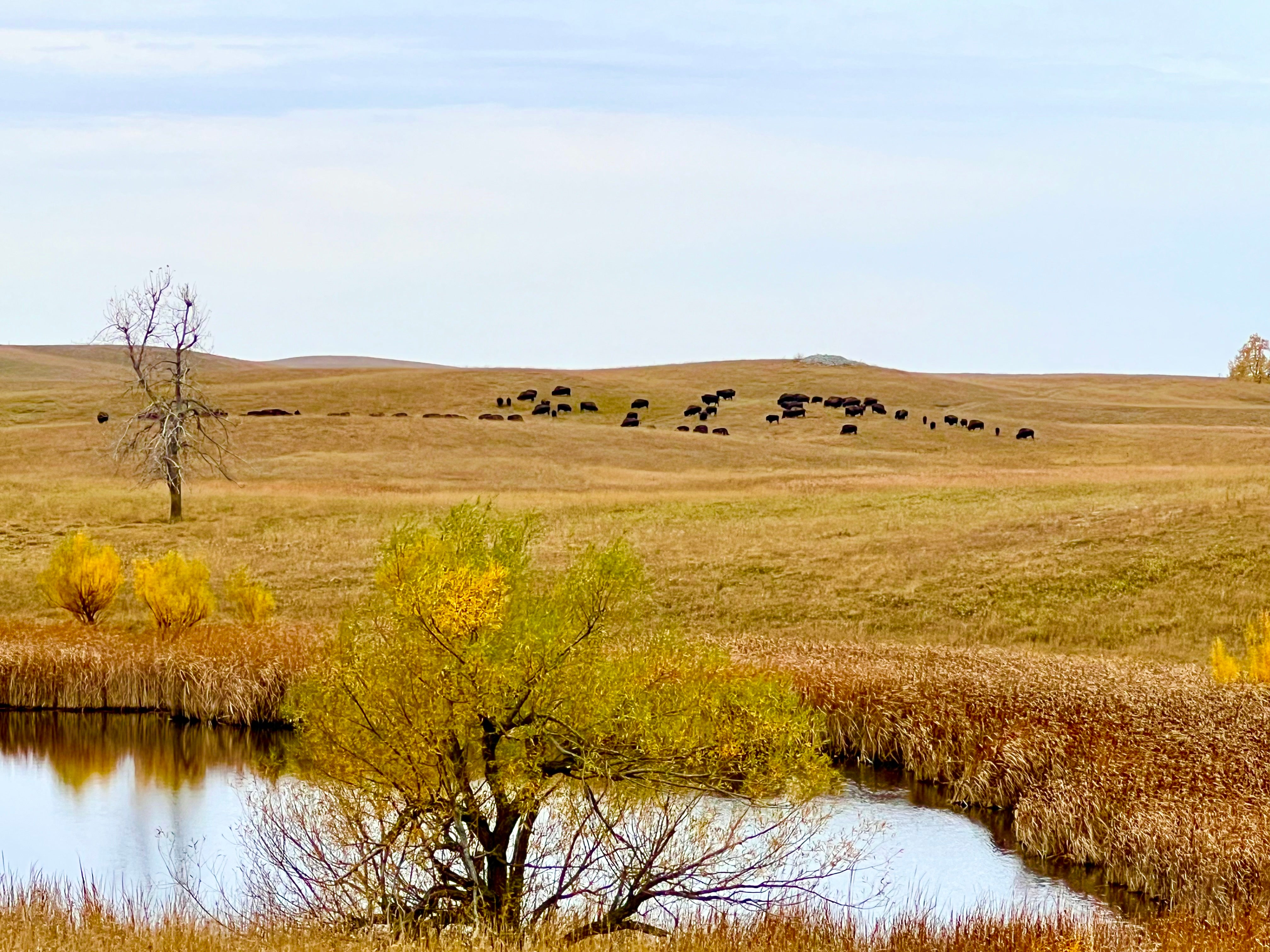
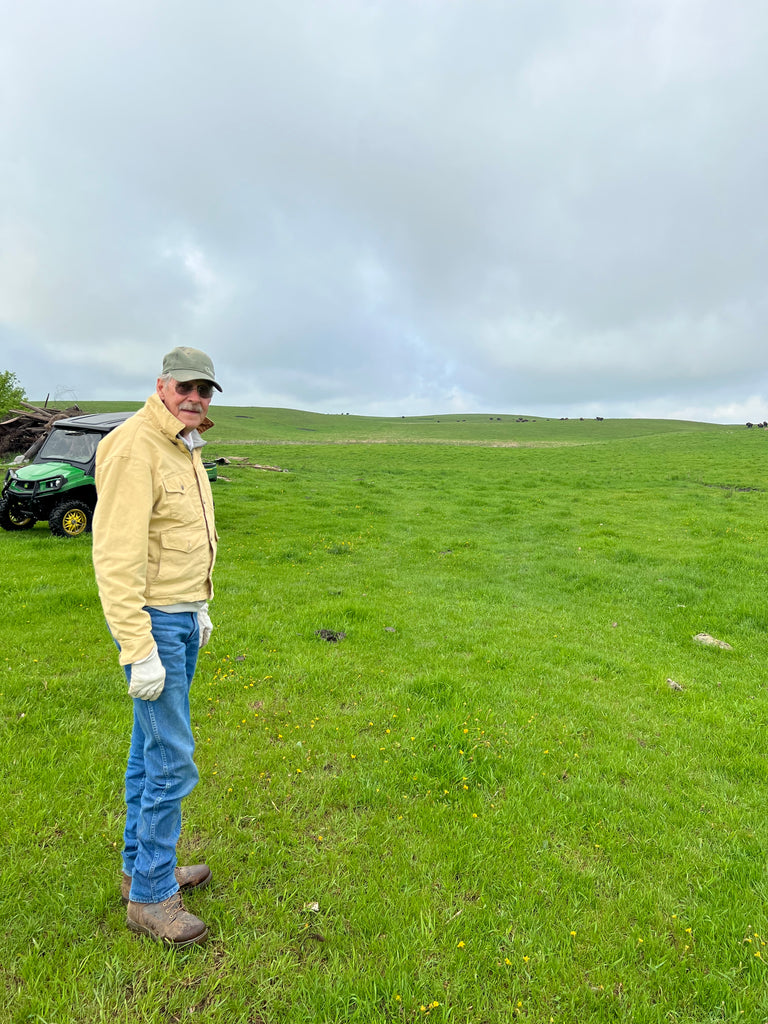
Bruce and Corrine Prins came to northeast South Dakota in 1973 with 400 acres and two young daughters born back in Iowa. They added on a piece at a time until the place ran to 2,000 deeded acres of native prairie outside Sisseton, tucked inside the boundaries of the old Lake Traverse Reservation. For sixteen years they ran beef cattle, then in 1989, Bruce did the math on a South Dakota winter. He bought seven head of buffalo on the theory that if he could sell a bison calf for roughly what a beef calf brought, he could cut the overhead that was eating him alive.
Today the ranch grazes about nine months out of the year. The herd moves through rotational units, sixty days on the smaller pieces, ninety to a hundred and twenty on the largest, then off it and let it rest. About two hundred acres go to alfalfa for winter supplement and nothing else gets farmed. There are two herds. The north herd, about a hundred head, lives up there year round; those mothers have never once come home, and only the calves ever make the trip. The south herd, another hundred and fifty or so, comes in each fall.
Bruce runs the ranch with his son John. The bison get handled exactly once. Every fall the herd comes in through the alley and the chute Bruce built himself, gets preg-checked and vaccinated, and the calf crop goes to auction, buyers bidding in person and online from across the country. The rest of the year, they're left alone. The doors are open, the grass is deep, and nobody's chasing them.
Bison do things beef cattle can't. In deep snow, a bison drives her head into the drift, shakes it clear, and the grass is right there in front of her. Where a beef cow marbles fat into the muscle, a bison stores it in that hump and draws it down over winter like a bear that never quite hibernates. The family's direct-to-you meat business, Heritage Bison Ranches, is processed at local lockers they know by name.
If you're lucky enough to do what you want to do, that's the key.
The Rule of Restraint
Ask Bruce what it takes to manage 2,000 acres of native tallgrass prairie and the answer is mostly restraint. Don't overgraze it, don't abuse it, and it'll take care of itself. That's really rule number one. What you've got is grass.
The Western Life
Bruce broke and sold driving horses as a young man, and raced chuck wagons at Fort Worth, Houston, and through Colorado. He still owns one and once drove it 250 miles to Deadwood over 21 days. Ask if he was any good at the racing and he doesn't hedge: "Damn right."
Purchases from this operation are handled by Heritage Bison Ranches — The family's direct-to-consumer meat label
Bruce & Corrine Prins
Founders
Came to northeast South Dakota in 1973 with 400 acres and two young daughters. In 1989 he traded beef for seven head of buffalo and never looked back.
John Prins
Son
Runs the ranch with Bruce.
Rachel & Lance Bollmeyer
Daughter & son-in-law, Heritage Bison Ranches
Farm corn and beans in Hinton, Iowa, where heifers finish about ninety days on feed the family grows themselves. Their partnership became Heritage Bison Ranches.
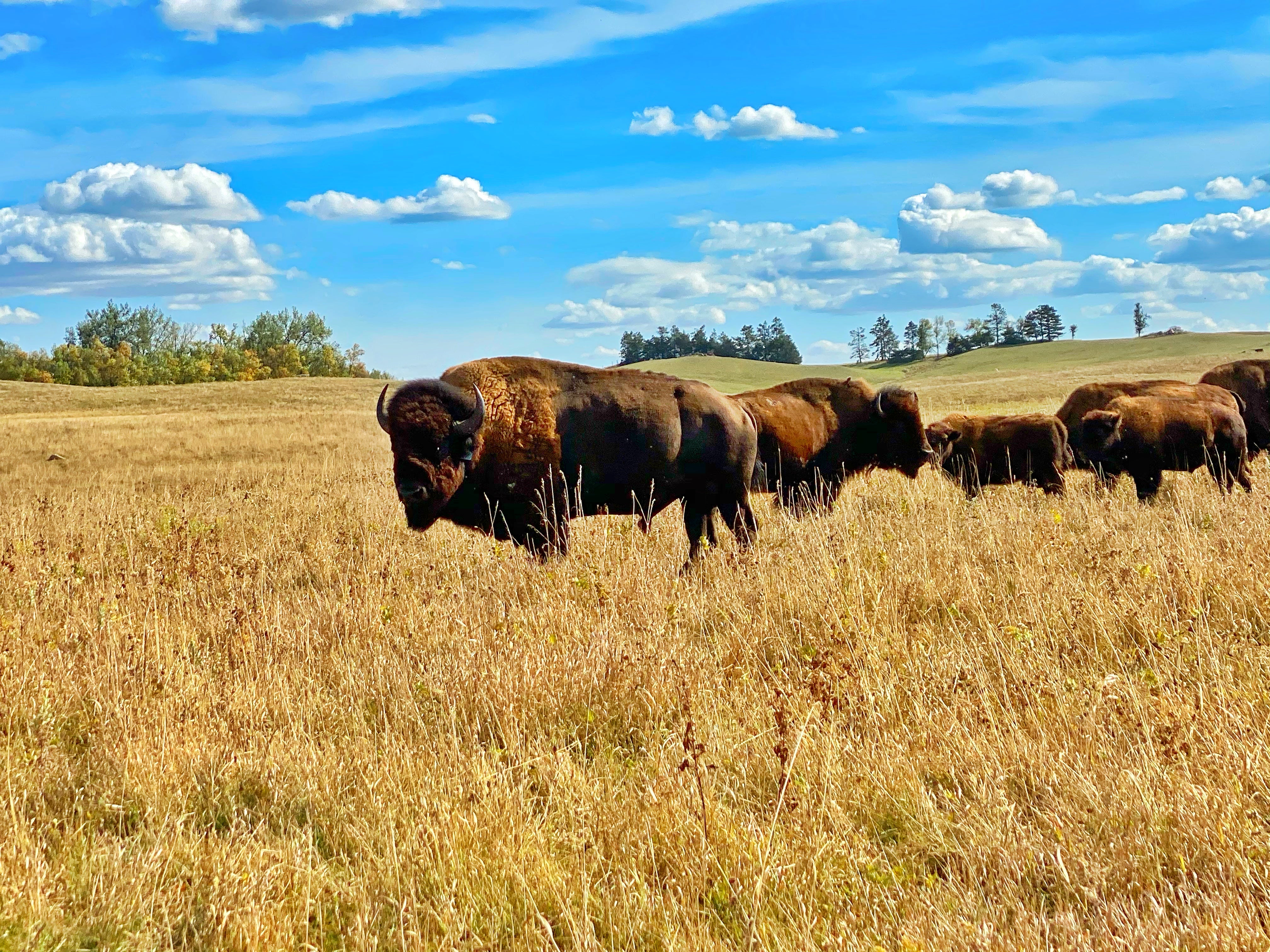
Bruce and Corrine Prins come to northeast South Dakota with 400 acres and two young daughters born back in Iowa.
After sixteen years of beef cattle, Bruce does the math on a South Dakota winter and buys seven head of buffalo.
filmed on the land, with the people who work it