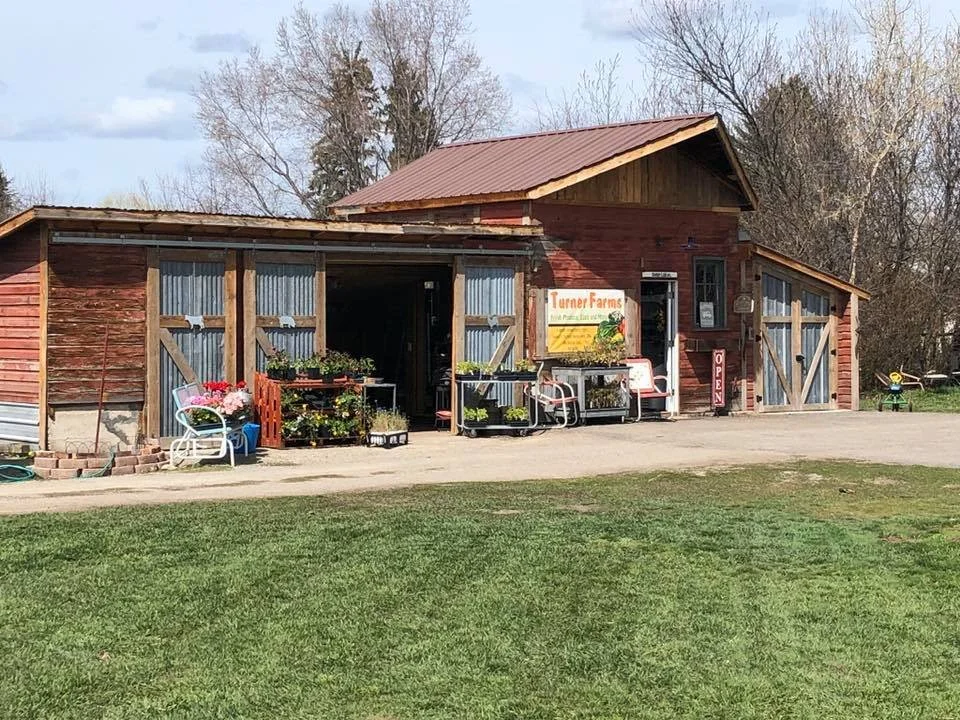
Jon Turner sold cars for a living, and in most ways still does. Farming came to him sideways, through his children. The Turner boys wanted bunk beds, so Jon and Erin offered to pay half if the boys earned the rest. There was a garden out back, so the kids harvested it and set up a small farmers market in the front yard for family and friends. They made enough for the whole bunk bed. "Oh, there's something to this," Jon remembers thinking.
The next year the kids wanted to go back to Mexico and could not afford it, so they put their youngest brother out by the road waving corn. "What person's not going to want to buy corn," Jon says. "Not lemonade, but corn." They earned their tickets. Twenty years on, that front yard stand has become a farm store.
The ground itself is the reason any of this works. Around the turn of the century two men bought up old railroad grant land in the valley below the Clark Fork and cut it into five acre tracts, at the same moment an apple blight was wiping out orchards on the East Coast. The pitch was simple. Come to Orchard Homes, Montana, buy five acres of paradise, and the water is free. An intricate ditch system ran the length of the valley and every piece of land in it had access. "Water is more valuable than gold," Jon says. "Your land is worthless if you don't have water to it."
All three Turner sons went to Montana State and studied agriculture, where what they were taught was big farms and big machines. They came home and told their father he was doing it wrong and hurting his soil. Then they wanted to come back and be part of it. Today they run cattle on ground the family does not own, rotating pasture to pasture, neighbor to neighbor. It is intensive work and it is very good for the soil. Ask Jon whether he brought his children into farming and he corrects the direction. His children bought him into it. "Absolutely. Oh, one hundred percent."
There are other farm stores in the valley, and Jon sends people to them. "We can't grow enough food here to satisfy the demand of our community," he says. So when a customer wants lettuce and his is not the best, he points them down the road. Asked why he would send anyone to a competitor, the answer is immediate. "Because it's good food, and I go over there and get it too." His advice to anyone starting out is to look at what the neighbors already grow, pick something they do not, and get very good at it.
Five acres get used twice over. Cucumbers go vertical, about a thousand pounds in a season, clean because they never touch the ground. Twelve thousand onions went in one at a time. Cover crop between the rows. Ground fabric bought from the same roll stock that goes under interstate highways, because it lasts and it saves him weeding. Though he likes weeding. "As soon as I pick a weed and I get done with the row, they started already at the other side again. But during that time that they're clear, my plant's growing better." He is clear about who is actually in charge. "I walk away for a week and it's the way the earth wants it to be, not me. And so I know my place."
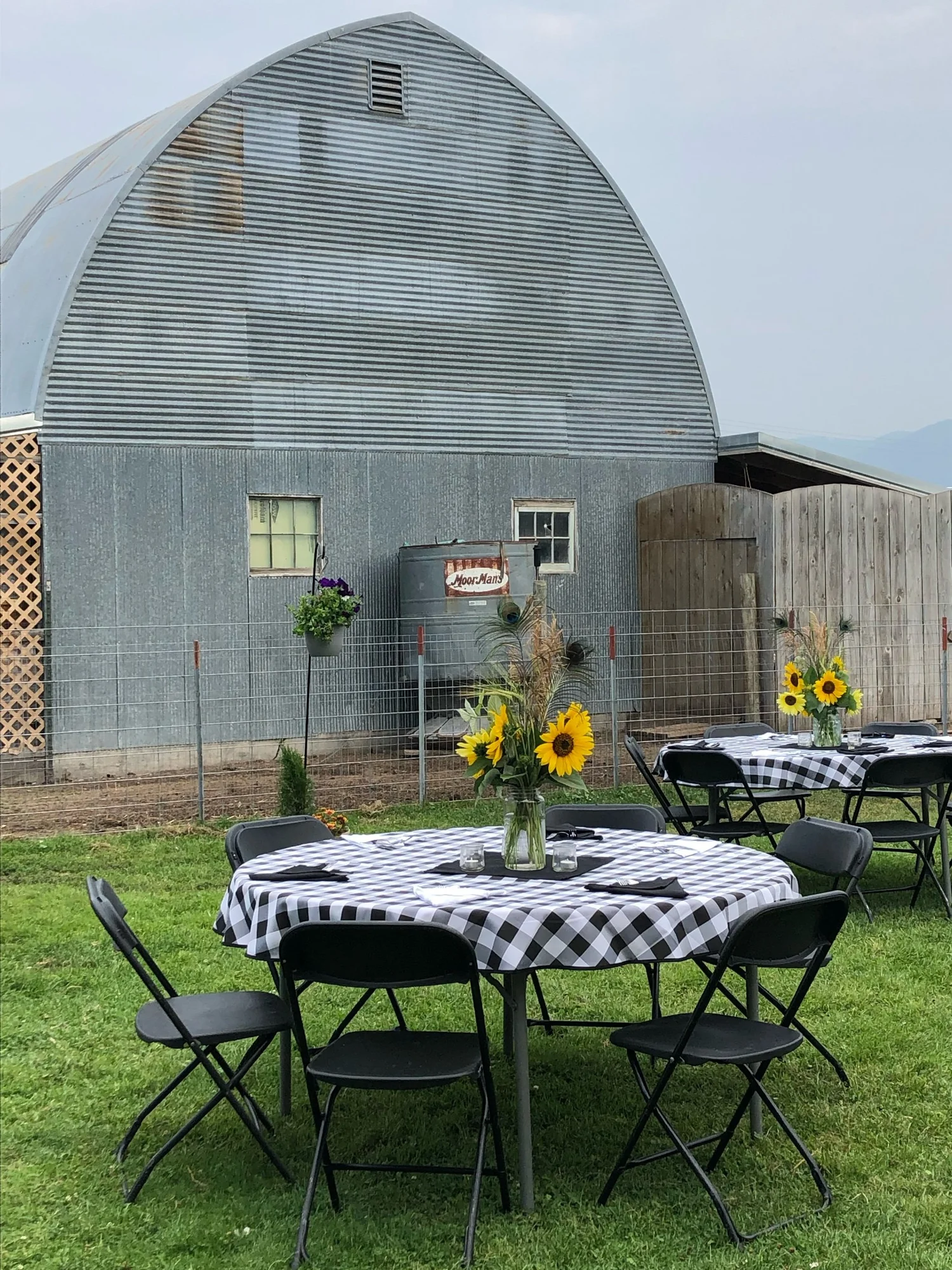
October is the engine. They sell about a hundred thousand pounds of pumpkins, far more than five acres can grow, so they contract with other growers and reload the fields every day. On weekends it is around a thousand people a day, and they do not charge admission. The revenue from those few weeks pays the bills for the rest of the year. The rest of the year that same building is the Market Garage, rented for showers and small events.
Thirteen or fourteen hundred school children come through on tours in a year. Jon walks every group into the farm store first, stands them in front of the freezers, and tells them plainly that the animals they are about to pet will end up in there. Most of the children are fine with it. The parents are the ones who flinch. He does it because it is true, and because almost nobody is near the process anymore, and he thinks that distance is what actually frightens people.
Ask what caps the operation and he will not say weather or labor. He will say land. Ground out here runs a hundred and twenty thousand dollars an acre, and there is no legal product he knows of that pays a note like that. The failures are matter of fact. Turkeys once, and they lost money on it. Calves die. Baby goats die, sometimes in front of visitors. "That happened. Okay. Well, let's just not do that one again." Erin put hundreds of hours into a federal grant they did not get. "You just have to be better."
He is careful to say the wins were not all his doing. They built a fence roughly where one already stood, and it turned out to be perfect for letting visitors feed the goats. He did not have goats yet. "Call it what you will. Yahweh, Buddha, divine intervention, God, Jesus. I don't care what you call it, but it's not all us."
The advice Jon repeats is not his own. He got it at a graduation party from an alumnus who told him two things. Save enough that your children can go to any college they want. And never stay in a job you do not love. "If you're not excited about getting up in the morning to do something, quit. And quit before you get committed to all these other things. Responsibilities, kids, debts. If you love what you do, you will be a better human being." He is a car dealer who became a farmer, and who stays up late catching up on the work he did not finish because he would rather talk to people. "So this is what I love to do."
Good food, even when it comes from the farm down the road
Jon Turner
Co-Owner
Raised in the car business, which is still his primary work. Came to farming through his children and now grows on five acres in Orchard Homes.
Erin Turner
Co-Owner
Runs the farm full time and drives the education side, from school tours to canning classes and farm camp.
Ethan, Logan and Gus Turner
Next Generation
The reason the farm exists, and the ones who came home and told their father to take better care of his soil. Ethan studied agricultural business and economics and Logan agricultural education, both at Montana State. Gus is still in high school. All three grew up in 4H and FFA.
Two developers buy old railroad grant land in the valley below the Clark Fork and cut it into five acre tracts, marketing Orchard Homes to apple growers displaced by blight on the East Coast. The water is free, carried by an intricate ditch system the length of the valley.
The Turner boys want bunk beds. The family puts a produce stand in the front yard to teach them about money, and it works. The bunk beds are paid for entirely by vegetables.
The neighboring property comes available and the family buys it, the year Jon's father dies.
A farm store in the little red barn, more than a thousand school children a year, canning classes, farm camp, the Market Garage event space, and an October pumpkin sale that draws about a thousand people a day on weekends.
School Tours
Thirteen to fourteen hundred school children come through in a year. Every group starts in the farm store, in front of the freezers, hearing the truth about where the animals end up.
Canning Classes
Hands on canning classes taught on the farm.
Pumpkin Festival
Every October, about a hundred thousand pounds of pumpkins and around a thousand people a day on weekends. No admission charged.
Farm Camp
Summer youth farm camp. Registration opens in early March.
Market Garage Events
The Market Garage, the pumpkin building the rest of the year, rented for showers and small events.