Matt Skoglund knew nothing about ranching. He was a lawyer from the Chicago area who spent a decade doing environmental policy work, and the issue he worked on most was bison management. That is how he fell in love with the species. What he fell out of love with was the policy world itself. He wanted something tangible. Something, as he puts it, you could touch, taste and feel.
He read a piece in the Bozeman Daily Chronicle about the National Bison Association meeting in Big Sky, reporting that the industry was growing and looking for producers. As a kid from Chicago he did not take it seriously at first. Then he read a memoir by Dan O'Brien, who started Wild Idea Buffalo in South Dakota and who Matt calls a hero of his. In it O'Brien describes pioneering the modern field harvest of bison, and that is the passage that made him serious.
What he did next he describes without embarrassment. In late 2017 he typed "bison ranching consultant" into Google. That turned up a man in Bozeman, and a holistic management workshop on a bison ranch, and from there a handful of mentors. The rest was reading everything he could find, a million podcasts, and a great deal of trial and error. "Knew we were going to make mistakes," he says. "I have made a ton of them."
He and his wife Sarah had already made the harder leap. On their first date, playing the getting to know you game, she asked where in the world he would live if he could live anywhere. He said southwest Montana. She said Paris. He jokes that he wanted to suggest they skip dinner and call their friends. She was intrigued instead. Eighteen years ago, about to be married, they decided that if they did not go now they would buy an apartment in Chicago, have a child, and never leave. So they quit their jobs, got married, and moved to Bozeman. Everyone thought they were mad. He calls it the best decision they ever made.
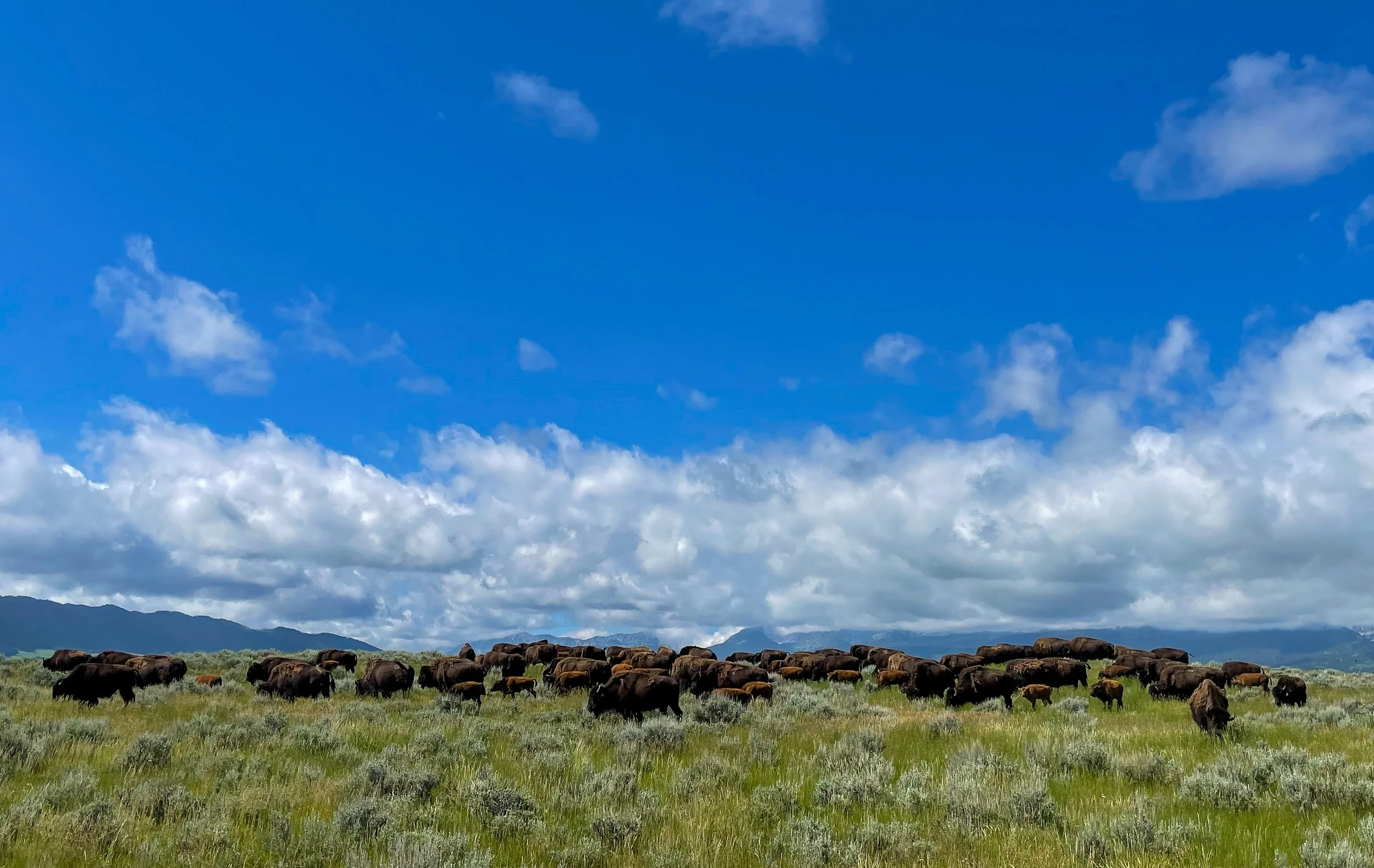
The ranch runs to a little over 2,500 acres owned and leased, classic Montana grassland where bison lived for thousands of years before they were pushed to the edge of extinction in the late 1800s. Before the Skoglunds took it on it had all been leased for cattle grazing, and Matt is quick to say the people who held those leases were fine ranchers who left the ground in good shape.
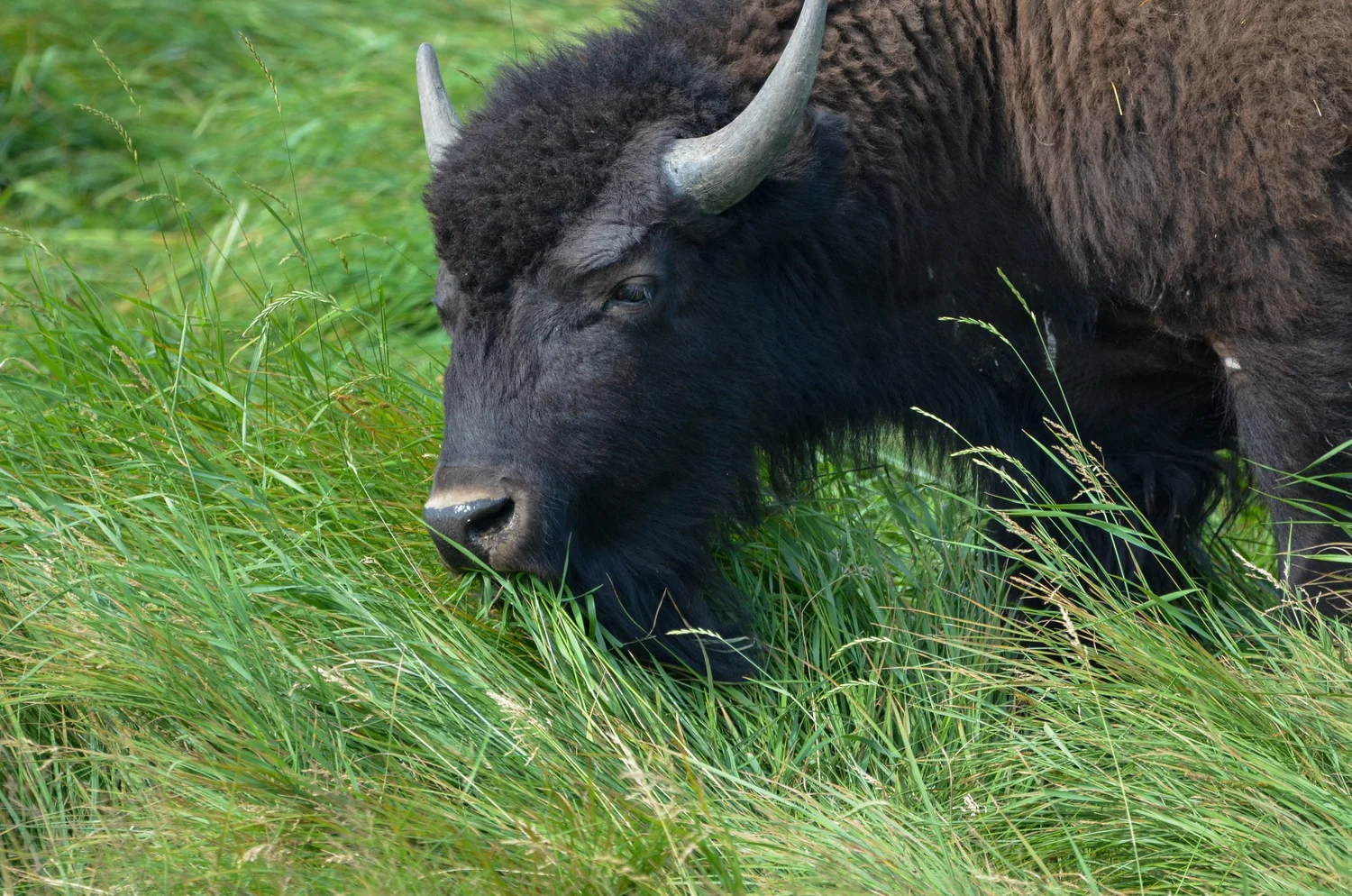
They run it as one herd, year round. They do not wean the calves, and let the mothers do that themselves. Everything is one hundred percent grass fed. The fences are built so that pronghorn can pass underneath and deer, elk and moose can go over. They manage for biodiversity, and they are the first Audubon certified bird friendly bison ranch in Montana.
Then there is the harvest, which is the part people seek them out for. Instead of loading animals onto a truck, they drive out to wherever the herd is grazing that day. It is a single shot from ten to fifteen yards with a copper bullet. "As ethical and humane as it gets for food," Matt says. He believes most people who find them come for that reason, and for the meat itself. "We could have the prettiest bison and the prettiest mountains and great views. But if the meat is not excellent, our business is dead."
Ask him why grass fed matters and he reaches for an analogy rather than a study. The more plant diversity there is on a ranch, the healthier the animals and the healthier the meat. "If you ate nothing but bananas, and the guy next to you ate a very diverse whole foods diet," he says, it stands to reason you would end up in different shape. A grazing animal is no different. Out here an intact prairie grassland carries that diversity naturally.
That belief runs all the way through how they sell. North Bridger sells by the quarter, half and whole animal, so the smallest order is eighty to ninety pounds of meat and can run to two thousand dollars. Matt emails every customer to thank them and give a rough timeline. After a field harvest he photographs it, nothing gory, and sends the photographs out with an update. He emails again when the meat is ready. About half their customers are in Montana and the rest are scattered across the country, and a good number have become friends who text him photographs of what is on their grill.
Business advisers tell him this is madness and that he needs to tighten the operation. He is unmoved. "Someone spending two thousand dollars to fill their freezer with our bison meat, I feel like I owe it to them to communicate transparently."
None of it is romantic in the way outsiders imagine. Costs have climbed on everything the business runs on: boxes, insulation, dry ice, fuel, groceries, insurance. Bison meat is not cheap, and they are reluctant to keep raising prices, but the sums have to work. "No margin, no mission," he says. "You can have the loftiest goals and the most beautiful vision. But if it does not work financially, it is game over."
The neighbours were nervous when they arrived, and Matt says he never took it personally. Put the shoe on the other foot, he says: if he had been a fifth generation Montana cattle rancher and heard that a young family from Bozeman, really from Chicago, with no ranching experience, was coming up to run bison where there were no bison, he would have been nervous too. They gave the Skoglunds a chance. They are friends now. He reckons the ground was earned by being seen out field harvesting at ten below zero.
Everything they own is under a conservation easement, held with the Gallatin Valley Land Trust since April 2022, which protects it from development permanently. Part of that is simply that he loves land and there is no more of it being made. The other part is his two children. He has taken the argument about development off the table before they are old enough to have it, in the hope of protecting their relationship with each other decades from now. He has read enough about siblings suing each other over a family ranch to know what he is trying to avoid.
Asked what he would tell someone who wants to do what he did, he gives two pieces of advice and no encouragement to be precious about either. Be geographically flexible, because the land boom here has put this valley out of reach and there is still affordable ground elsewhere in America. And lease rather than buy where you can, which is hard without a track record, so knock on doors, be courteous, and never knock on a door where another rancher already holds the lease. Then go to conferences and actually talk to people. He mentions a young man who worked for them, became part of the family, outgrew the job and now runs a large cattle operation in central Montana. "He worked his ass off," Matt says. "So it is possible."
No margin, no mission
The Neighbors
The neighbours were nervous when they arrived, and Matt says he never took it personally. Put the shoe on the other foot, he says: if he had been a fifth generation Montana cattle rancher and heard that a young family from Bozeman, really from Chicago, with no ranching experience, was coming up to run bison where there were no bison, he would have been nervous too. They gave the Skoglunds a chance. They are friends now. He reckons the ground was earned by being seen out field harvesting at ten below zero.
The Easement
In April 2022, after years of work and planning, the family put all of their land into a conservation easement with the Gallatin Valley Land Trust, protecting it from development forever. Part of that is simply that Matt loves land and there is no more of it being made. The other part is his two children. He has taken the argument about development off the table before they are old enough to have it, in the hope of protecting their relationship with each other decades from now.
Why Grass Fed
Ask him why grass fed matters and he reaches for an analogy rather than a study. The more plant diversity there is on a ranch, the healthier the animals and the healthier the meat. If you ate nothing but bananas, and the guy next to you ate a very diverse whole foods diet, he says, it stands to reason you would end up in different shape. A grazing animal is no different. Out here an intact prairie grassland carries that diversity naturally.
The Ranch Itself
Nature is in charge here, the family writes, and the whole operation rests on five pillars: sunshine, water, soil, grass and bison. The ranch is habitat for sage grouse, pronghorn, sandhill cranes, mule deer, wolves, moose, mountain lions, elk, black bears, waterfowl and songbirds. Their management, rooted in holistic and regenerative principles, builds soil, holds more water in the ground, and grows the diversity of grasses, forbs and wildflowers on the landscape. Beyond the meat, the ranch hosts stays at The Ranch House on Airbnb, location filming, photography and weddings, and Matt consults for people getting into bison. Their short films from 2019 through 2025 are on their site and YouTube channel.
A Family Ranch
Matt and Sarah Skoglund started North Bridger Bison in 2018. Their children, Otto and Greta, help make up the life of the ranch alongside Ed the bird dog, Sally the ranch dog and Walter the cat. The family describes the work simply: nature provides sunshine and water; that grows grass; and the bison eat the grass.
Protected Ground
In April 2022, the Skoglunds placed all of their land under a conservation easement with Gallatin Valley Land Trust, permanently protecting it from development. The ranch also supports sage grouse, pronghorn, sandhill cranes, mule deer, elk, moose, bears, waterfowl and songbirds.
Matt Skoglund
Co-Owner
A lawyer who spent ten years on environmental policy, much of it on bison management, before deciding he wanted to do something he could touch, taste and feel. He serves on the boards of the Western Sustainability Exchange and the Bozeman Community Food Co-op, and is a former Vice President of the Montana Bison Association.
Sarah Skoglund
Co-Owner
An interior designer in Chicago before Montana, and the reason the move happened when it did rather than never. She worked for years for the Cancer Support Community in Bozeman and serves on the board of the Gallatin Valley Land Trust.
Matt and Sarah Skoglund quit their jobs in Chicago, get married, and move to Montana.
After reading Dan O'Brien on field harvesting, Matt searches for a bison ranching consultant and starts learning the business from scratch.
North Bridger Bison is founded in the Shields Valley, built from nothing with no prior ranching experience.
After years of work and planning, the family puts all of their land into a conservation easement with the Gallatin Valley Land Trust, protecting it from development forever.
More than 2,500 acres owned and leased, one grass fed herd run year round, every animal field harvested on the ranch, and the whole place under a conservation easement.
The Ranch House Airbnb
Stay on the ranch itself. The family lists The Ranch House on Airbnb, booked through their site.
Audubon Certified Birding Experience
A birding experience on the first Audubon certified bird friendly bison ranch in Montana, booked through LandTrust.
Location Filming, Photography and Weddings
The ranch hosts location filming, photography and weddings by arrangement.
Ranch Visits
Visits to the ranch in the Shields Valley. Contact the ranch for details.
filmed on the land, with the people who work it