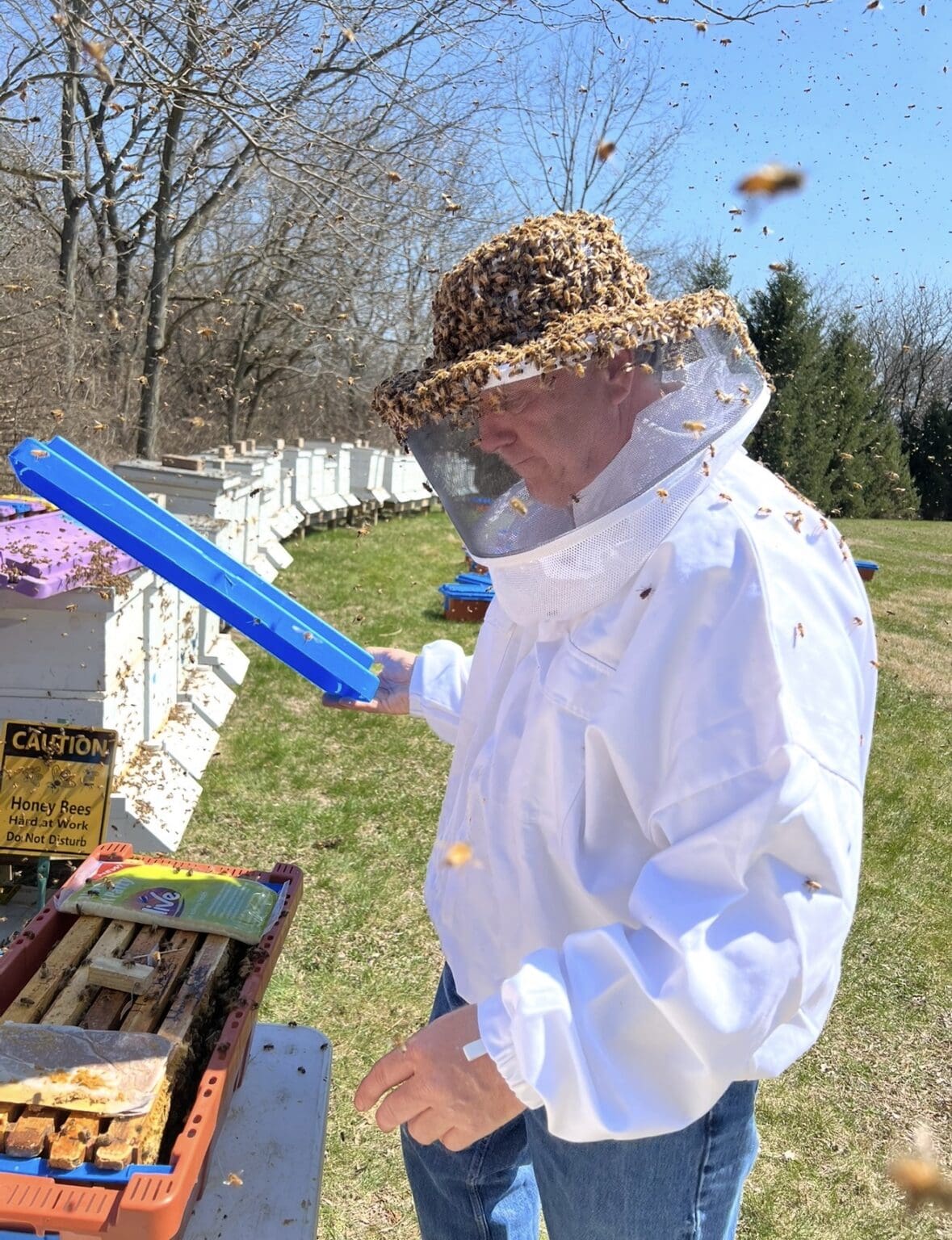
He was twelve years old when he started, working the hives at Cranbrook outside Detroit. He used to carry observation hives into school with him. The other kids called him the bee man.
Then he did something else for a long time, the way people do. About ten years ago he and his wife Karen changed course and went back to it. They took their first honey to the Palatine farmers market and sold out that afternoon, so they added hives, and then added more, and at some point it stopped being a second job.
Honey Lake Bee Co. is named for the lake near the farm, and the lake is named for the color of its water. Somebody a long time ago looked at it and thought honey.
There are about 250 hives now, spread from northern Lake Barrington out to Barrington Hills and Lake Zurich. Some sites hold two hives. Some hold forty. Each one can carry sixty to eighty thousand bees in the middle of summer. In a state with thousands of beekeepers, only seven run more than two hundred hives, and Brian is one of them.
He is not migratory. The hives do not get loaded on a truck and driven to California to pollinate almonds. They sit where they sit, year round, and the doors stay open. If the bees do not like how they are kept, they leave. There is a word for it, absconding. Happy bees stay, and that is the only review he needs.
Ask him whether the honey is organic and he will tell you something most people have never heard. No honey produced in the United States can legally be called organic. The rule requires that everywhere a bee forages be certified organic too, and bees travel two miles in any direction they choose. So it cannot be done here. Imported honey only needs its own country to sign off, and ours has to accept the claim.
The care shows up in what he declines to do. No heat on the cappings, because heat changes the honey. The honey gets strained rather than filtered, because filtering takes the pollen out and the pollen is the point. It goes from the frame to the jar and that is most of the process.
He segregates by season instead of blending, so spring, summer and fall honey each taste like the flowers that were open. The goldenrod is the only one tied to a single plant, the last thing blooming in that part of Illinois, and it carries a butterscotch note he can smell across the room while extracting.
When he sells honey from other beekeepers, tupelo or buckwheat or orange blossom, he vets them first. A lot of honey on the market is not honey. He worked with the University of Pennsylvania on testing and they found very few store bought samples that were pure.
It's best to know the beekeeper.


filmed on the land, with the people who work it